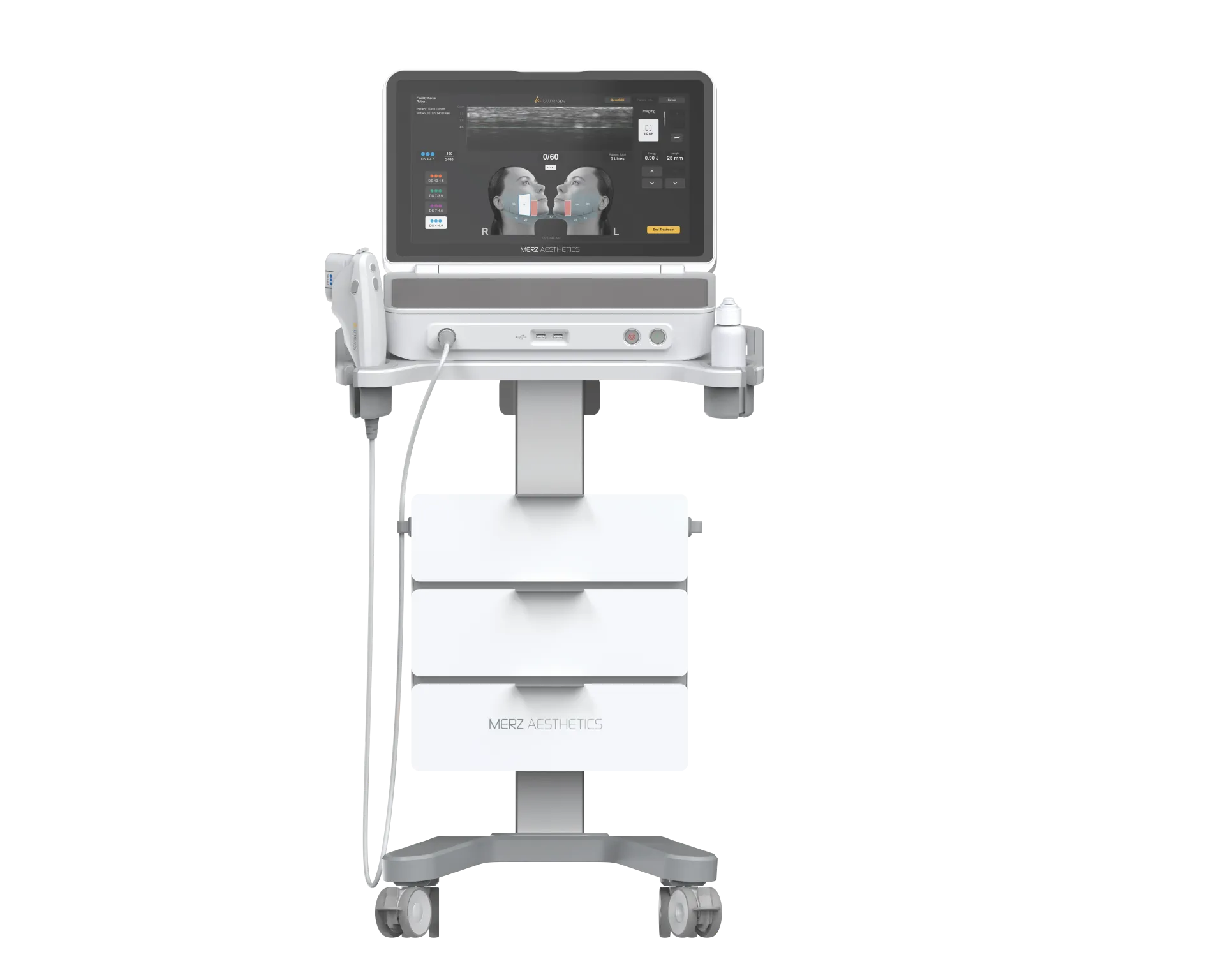
The Technology Behind Ultherapy
Ultherapy is the only FDA-cleared non-invasive procedure that uses micro-focused ultrasound with visualization (MFU-V) to lift skin on the face, neck, and chest. The device emits ultrasound waves at frequencies of 4MHz and 7MHz, targeting tissue at 3 calibrated depths: 1.5mm in the dermis, 3.0mm in the deep dermis, and 4.5mm at the SMAS (superficial muscular aponeurotic system) layer. The SMAS is the same structural layer that plastic surgeons manipulate during surgical facelifts, making Ultherapy the only non-invasive device that reaches this depth without cutting skin.
At each treatment point, the ultrasound energy raises tissue temperature to 60-70 degrees Celsius for a fraction of a second, creating precise thermal coagulation points measuring 1mm in length. These micro-injuries remain entirely below the skin surface while the epidermis stays untouched at normal body temperature. The body responds to these controlled thermal injuries by producing fresh collagen type I and type III fibers, gradually tightening and lifting the treated tissue over 90-180 days.
Step-by-Step Ultherapy Procedure
Step 1: Consultation and Mapping
The procedure begins with a 15-20 minute assessment where the aesthetic medicine specialist evaluates facial laxity across 5 key zones: forehead and brow, periorbital area, midface and cheeks, lower face and jawline, and submental region. Using the Ultherapy visualization screen, the practitioner identifies the exact tissue layers and marks treatment areas directly on the skin with a washable marker. This mapping determines the transducer selection and shot count for each zone, typically ranging from 200 shots for a targeted area to 530 shots for a comprehensive full-face and neck protocol.
Step 2: Preparation and Comfort Measures
A topical numbing cream containing 4% lidocaine is applied to the treatment areas 30-45 minutes before the procedure begins. The skin is then cleaned with an antiseptic solution and a thin layer of ultrasound gel is applied to facilitate energy transmission. Some clinics in Gangnam offer oral analgesics or Pro-Nox nitrous oxide for patients who prefer additional comfort management. The practitioner selects from 3 transducer tips based on the treatment plan: the 4-4.5 transducer for deep SMAS targeting, the 7-3.0 for mid-dermal treatment, and the 7-1.5 for superficial dermal tightening.
During the Ultherapy Session
The practitioner places the Ultherapy handpiece against the skin and activates the ultrasound visualization screen, displaying a real-time cross-section of tissue layers beneath the treatment area. This imaging confirms the transducer is targeting the correct depth before each energy pulse fires. The device delivers lines of focused ultrasound energy in precise rows, with each line containing 17-25 individual thermal coagulation points spaced 1.1-1.5mm apart. Patients feel a brief warm prickling sensation with each pulse, most intense along the jawline and forehead where nerve density is highest.
Treatment duration varies by zone: brow lifting requires 15-20 minutes with 80-120 shots, full lower face and jawline takes 30-40 minutes with 200-300 shots, and a comprehensive face-neck-chest protocol runs 60-90 minutes with 400-530 shots. The practitioner adjusts energy levels between 0.4-1.2 joules per line based on tissue depth and patient feedback. Higher energy settings at the 4.5mm SMAS depth produce stronger collagen stimulation but increase the warm prickling sensation during delivery.
Real-Time Visualization Advantage
The visualization component distinguishes Ultherapy from blind-energy devices that deliver heat without confirming tissue depth. The ultrasound screen displays the dermis, subcutaneous fat, and SMAS layer in grayscale cross-section, allowing the practitioner to verify that energy reaches the intended target with each pulse. This see-and-treat approach prevents superficial energy waste on fatty tissue and ensures consistent thermal coagulation at the collagen-producing depths. RE:BERRY practitioners in Gangnam use this visualization to customize energy delivery around anatomical landmarks such as the temporal artery and parotid gland, maintaining both safety and efficacy throughout the session.
What Happens After the Final Shot
Once all planned shots are delivered, the ultrasound gel is removed and the skin is cleaned. No bandages, sutures, or wound care products are applied. Patients observe mild redness that fades within 2-4 hours and may notice slight tenderness when touching the treated areas. The practitioner reviews aftercare instructions covering sun protection with SPF 30-50, hydration targets of 2-3 liters daily, and a 48-hour pause on intense exercise. A follow-up assessment at 12 weeks evaluates early collagen remodeling results, with peak lifting visible at 3-6 months post-treatment.
The entire Ultherapy procedure from numbing cream application to departure takes approximately 90-120 minutes for a full-face protocol. Patients return to work, social activities, and travel the same day. No maintenance sessions are required during the 12-18 month result window, though some patients choose annual touch-up treatments of 100-200 shots to sustain collagen density as natural aging continues.